
The Tamil Project - Anusha Kav
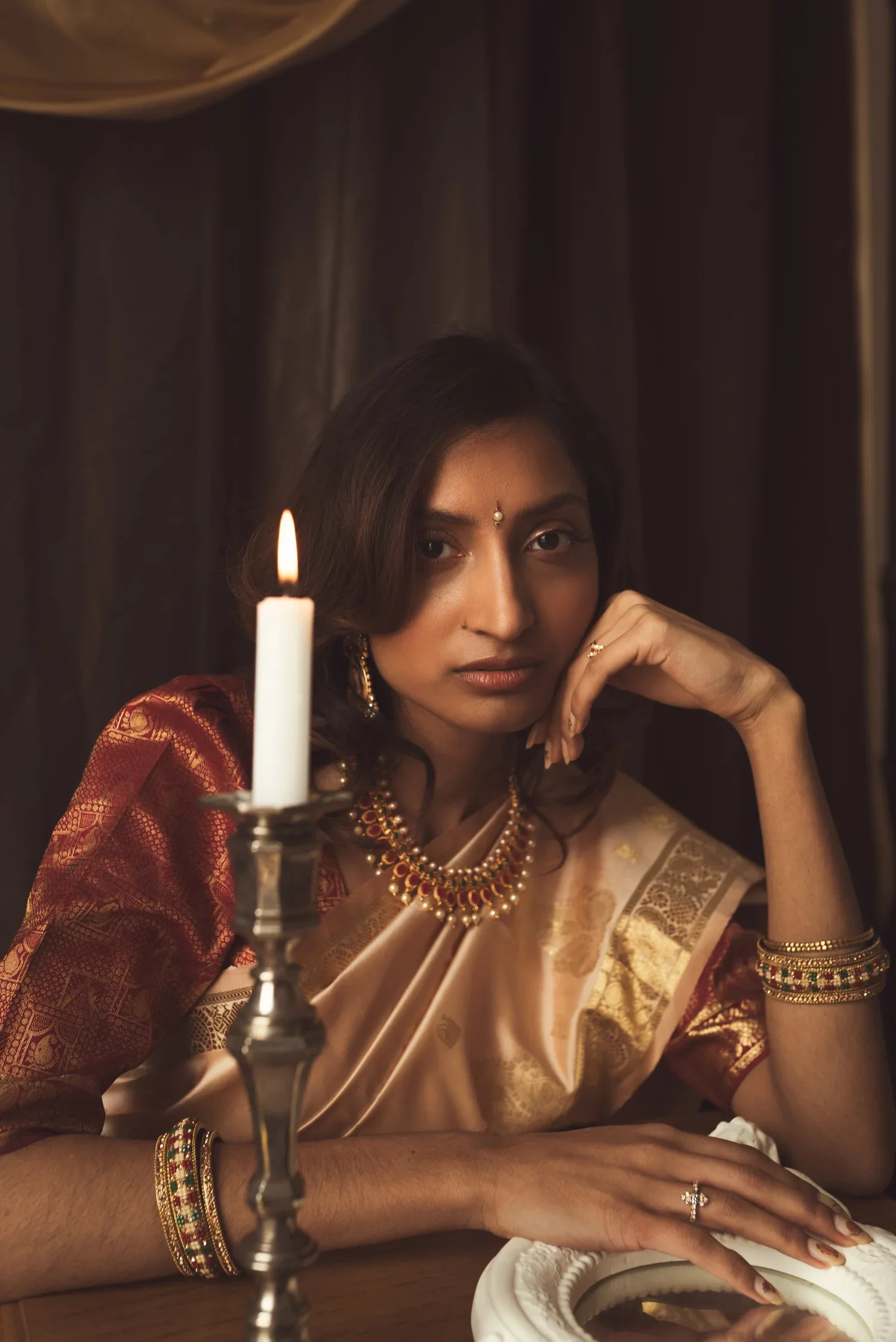
This interview was conducted in 2020
At 22, Anusha Bhagavathy Kav is already shaping a voice that sits at the intersection of media, culture, and identity. A Master of Journalism student at the University of British Columbia, her work and perspective are deeply rooted in storytelling, both personal and political.
In this conversation, Anusha reflects on growing up Tamil in Canada, navigating identity, and the power of representation.
Tell me about yourself. Who are you today?
My full name is Anusha Bhagavathy Kav and I am 22 years old. I’m currently a Master of Journalism student at UBC. I previously studied Political Science with a minor in Women’s and Gender Studies at the University of Alberta.
I’m really interested in media, politics, and popular culture—especially how they all intersect.
What brings you joy outside of your work and studies?
I love anything artistic. Painting, drawing, writing, singing, dancing, baking, reading—if it lets me express myself, I’m drawn to it. I also love watching commentary and media analysis videos, and I’ll always enjoy a good romantic comedy.
What’s a quality you love about yourself?
My passion. When I care about something, I give it everything I have—whether it’s relationships, friendships, or creative projects. It’s something I’m really proud of.
What did your childhood look like?
I grew up in Edmonton, in Mill Woods. I loved being outdoors, especially in the snow. Music and dance were a huge part of my life—I trained in Bharatanatyam for about 10 years.
Because of where I grew up, I was surrounded by other South Asian communities, so in many ways, I didn’t feel the weight of being “different” until later.
How has your family shaped who you are?
My family and our traditions have shaped my worldview a lot. I grew up vegetarian, which turned into a deep love for animals. Our cultural practices also influenced how I understand identity and the world around me.
We’re also a very outspoken family—we talk about politics, race, and current events all the time. Being a second-generation immigrant and the first born in Canada means those conversations come up a lot.
What has your experience been like as a Tamilian living here?
For a long time, I felt like the minority within the minority. Even though I grew up around South Asians, I didn’t know many Tamil people at school. I was often mistaken for other ethnicities.
Over time, I’ve seen more Tamil voices show up online and in media, which has been really powerful. But growing up, I often had to explain what it meant to be Tamil—and in doing that, I learned more about my own identity.
There’s also a gap in representation. South Indian culture, especially Tamil culture, is underrepresented in the media consumed in the West. Our language, traditions, and histories are distinct, but they’re often overlooked.
What does Tamil representation mean to you?
It’s about acknowledging diversity. Tamilians exist all over the world—India, Sri Lanka, Singapore, Canada—and our cultures adapt depending on where we are. There isn’t one “correct” way to be Tamil.
I also think people don’t fully understand the depth of our language. Tamil is one of the oldest living languages still in use, and it has completely different roots from languages like Hindi or Punjabi.
What frustrates me is when representation is reduced to aesthetics—jewelry, clothing—rather than recognizing Tamil identity as something lived and experienced, regardless of how closely someone connects to the language or homeland.
What are you most proud of?
Receiving a Canada Graduate Scholarship for my Master’s degree. That meant a lot to me. I’ve also had my work published in several outlets, which has been incredibly rewarding.
What matters most to you?
Integrity, kindness, and justice.
As someone rooted in feminist and critical studies, I believe that without integrity and a commitment to justice, we can’t move toward equity or progress.
How do you want to be perceived?
As someone kind and passionate.
Visually, I’m drawn to neutral tones, vintage and antique aesthetics, and soft textures. I love blending old Hollywood aesthetics with Tamil and Indian influences. That intersection feels powerful—it challenges who gets to exist within those visual spaces.
Tell me something unexpected about you.
I’m obsessed with birds. I genuinely wish I were a Disney princess so they’d come sit on me.
Also, I was platinum blonde—Marilyn Monroe style—for a year. She actually inspired my undergrad thesis on celebrity culture and politics.
What’s something you believe, just for fun?
Science can’t say with 100% certainty that mermaids don’t exist… because most of the ocean is still undiscovered.
Are there any Tamil sayings or superstitions that stayed with you?
If you laugh at night, you’ll cry in the morning.
